Plough Monday (the first Monday after twelfth night or Epiphany) is historically the day which marked the end of the Christmas period for the agricultural communities in the eastern counties of England. It was an occasion for plough gangs, who would be disguised, usually by blacking their faces, to procure money or largesse by dragging a decorated plough around the larger houses in the parish, with the cry of "Penny for the ploughboys!". It was said that if you did not contribute even one penny, you would find a furrow ploughed across your lawn in the morning. Before the Reformation, the Church sanctioned the collection of money, some of which went toward providing the plough-light, maintained by the ploughmen's guild in the parish church. This usually took the form of a candle or rush-light, placed before the altar, whose flame was never allowed to go out.
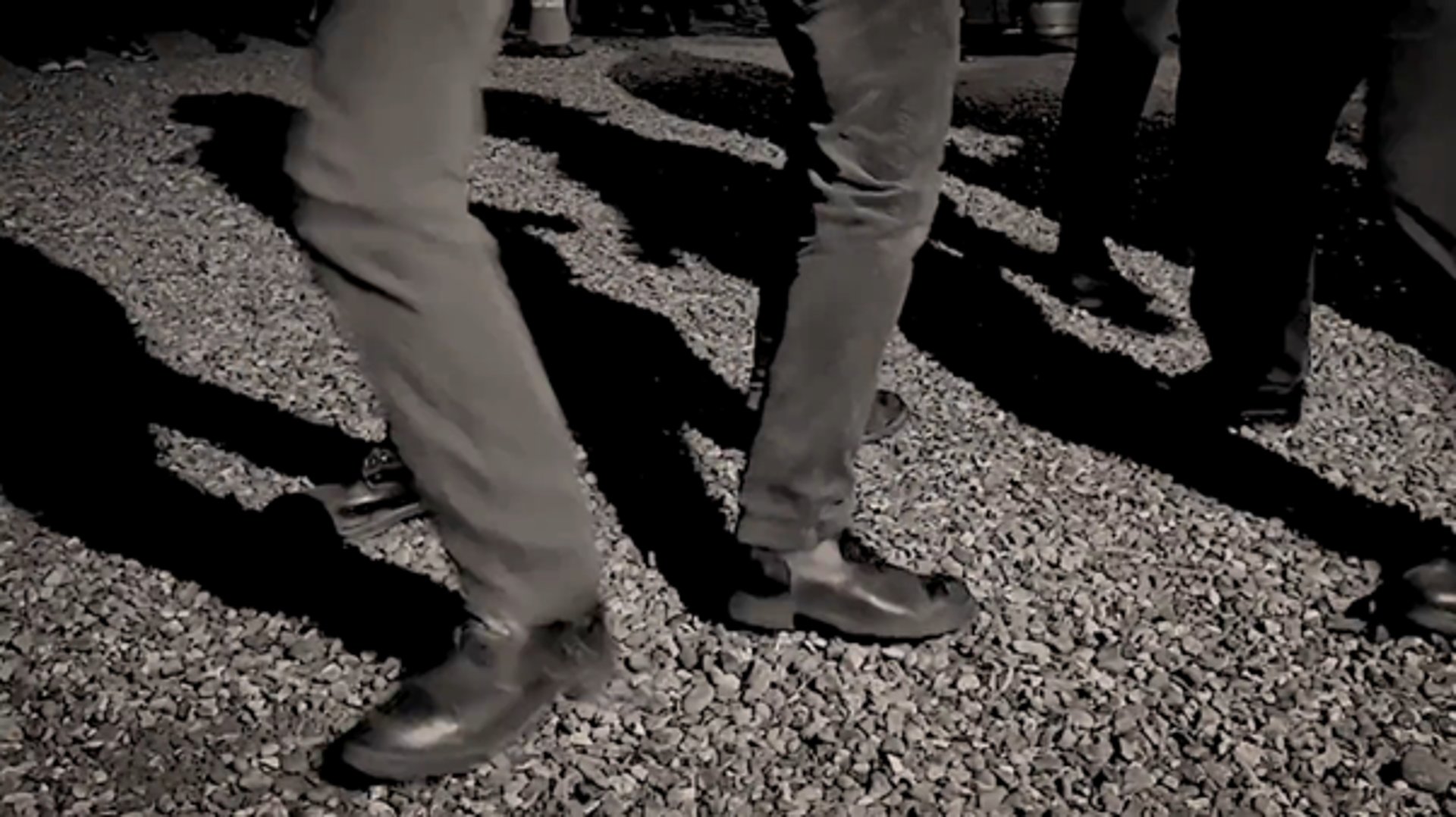
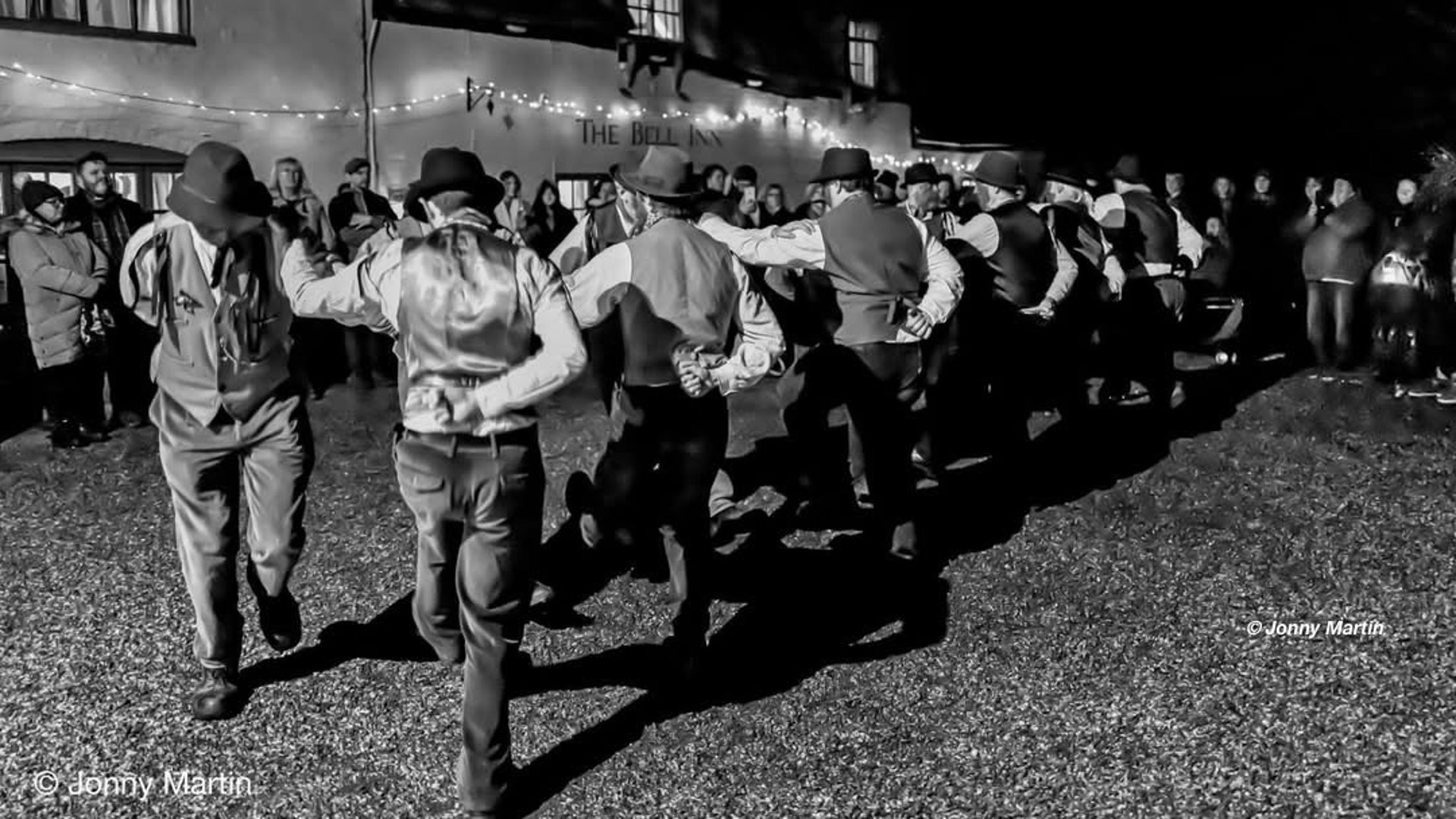
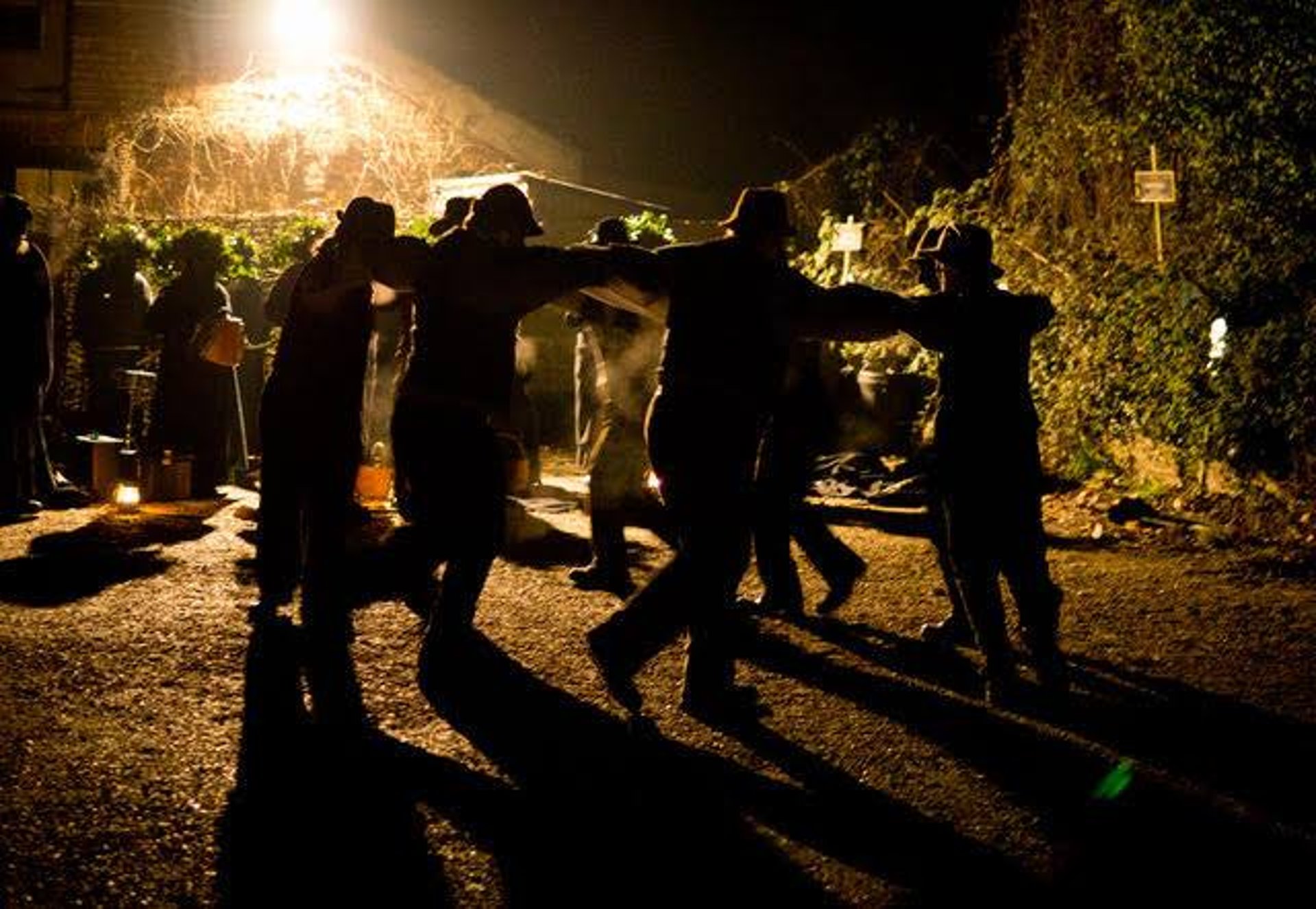
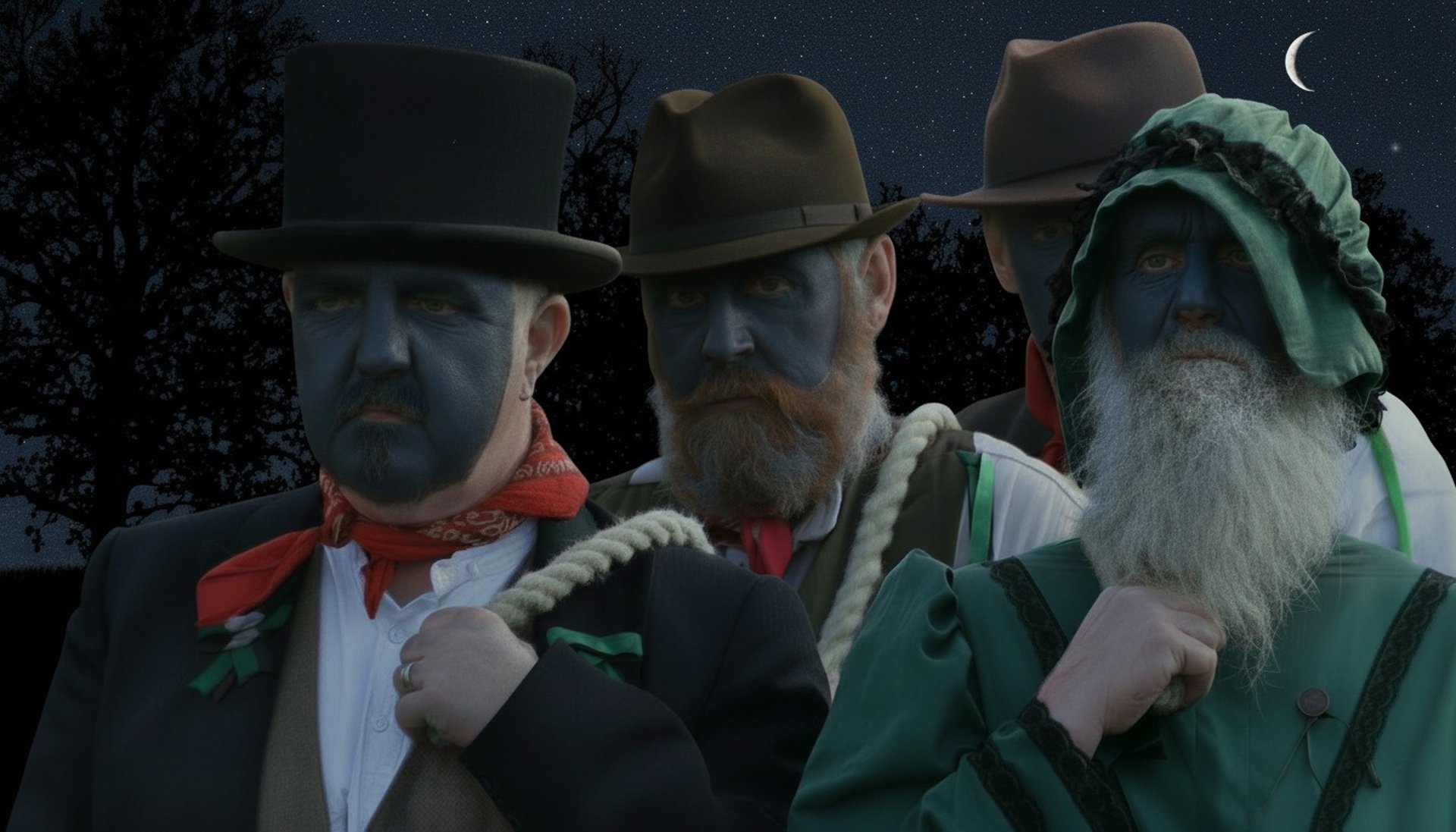
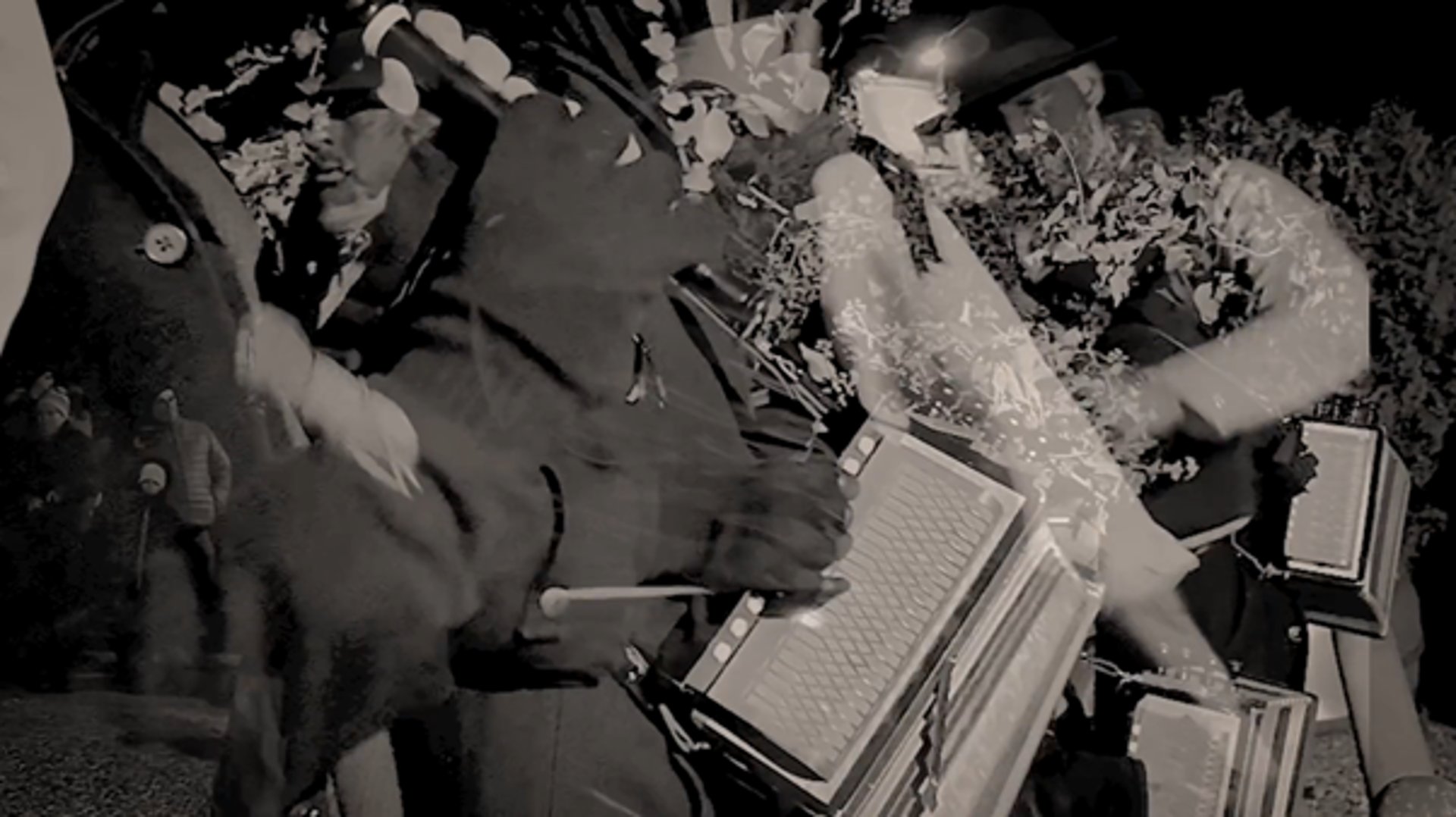
There would also be gangs of Molly dancers, sometimes accompanying the plough gangs. Old Glory was formed in 1994 to revive the tradition of Molly dancing in East Suffolk. Molly dancing traditionally only appeared during the depths of winter and is regarded by many people as the East Anglian form of Morris. It is characterized by blackened faces, heavy boots (usually hobnailed) and the presence of a "Lord" and a "Lady", two of the men specially attired respectively as a gentleman and his consort, who lead the dances. There are other characters in Old Glory, such as the “umbrella-man”, who acts as announcer, a “box-man” carrying a collecting box, the “broom-man”, who clears the way for the dancers, and the “whiffler”, whose job it is to marshal the dancers. Blackening faces was a form of disguise, since the dancers could not afford to be recognised. Some of those people from whom they had demanded money with menaces would have been their employers. Molly dancing is by nature robust and, some would say, aggressive. These qualities are emphasised by the sound of the hobnailed boots worn by the dancers, which were the normal form of footwear for farm workers in the East of England right up until the second half of the twentieth century.
There is very little known about the dances that Molly dancers of the early part of the twentieth century would have performed, other than that they resembled country dances, but danced using a slow, heavy step, and with much swinging about in pairs. We have constructed our own dances, based on such information as we have, and we have developed our own distinctive style - the "Waveney Valley" tradition. The Molly dancers of Old Glory are all men, whilst the musicians are all women. The musicians play a variety of traditional instruments, invariably including at least one four-stop melodeon in the "Suffolk key" of C.
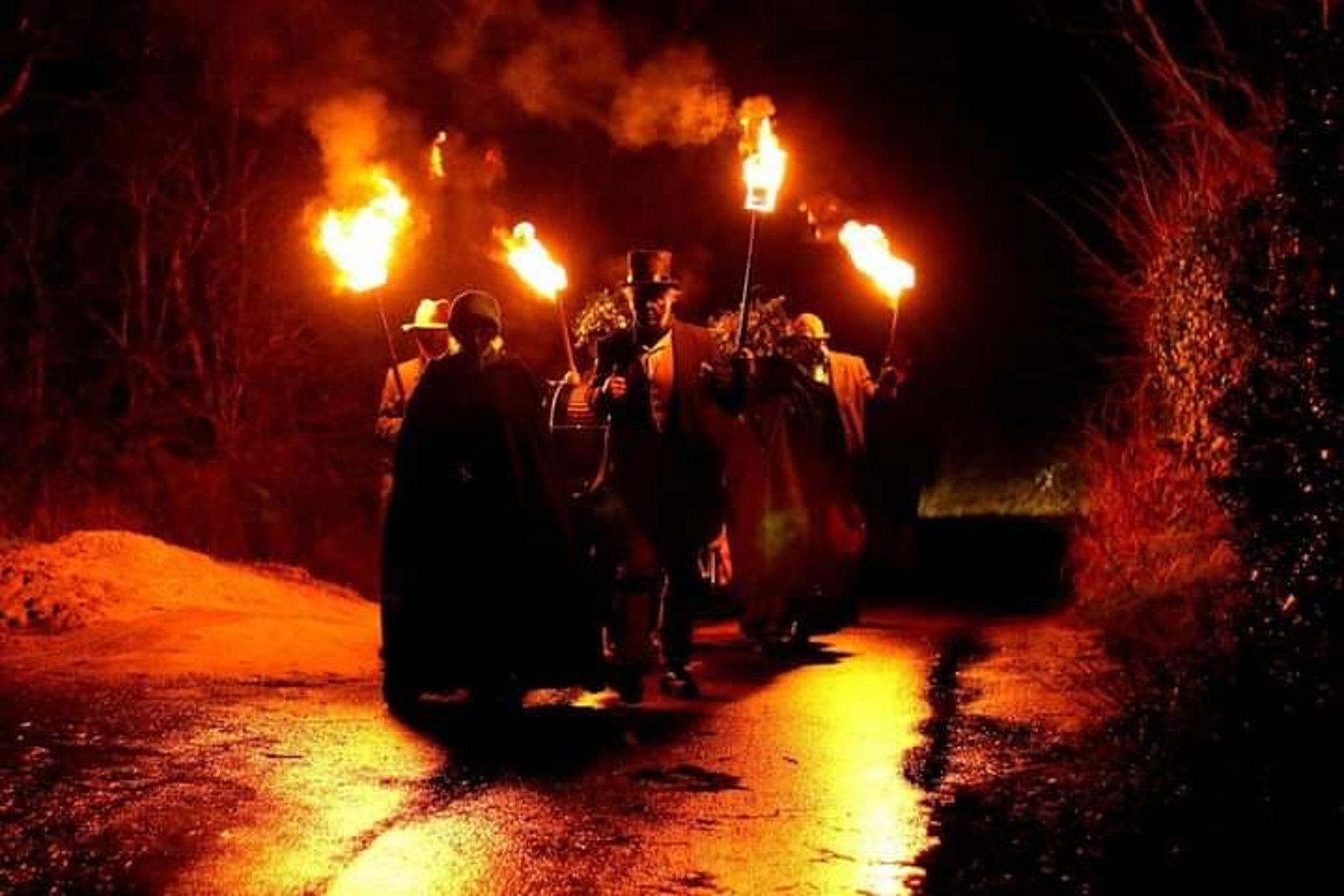
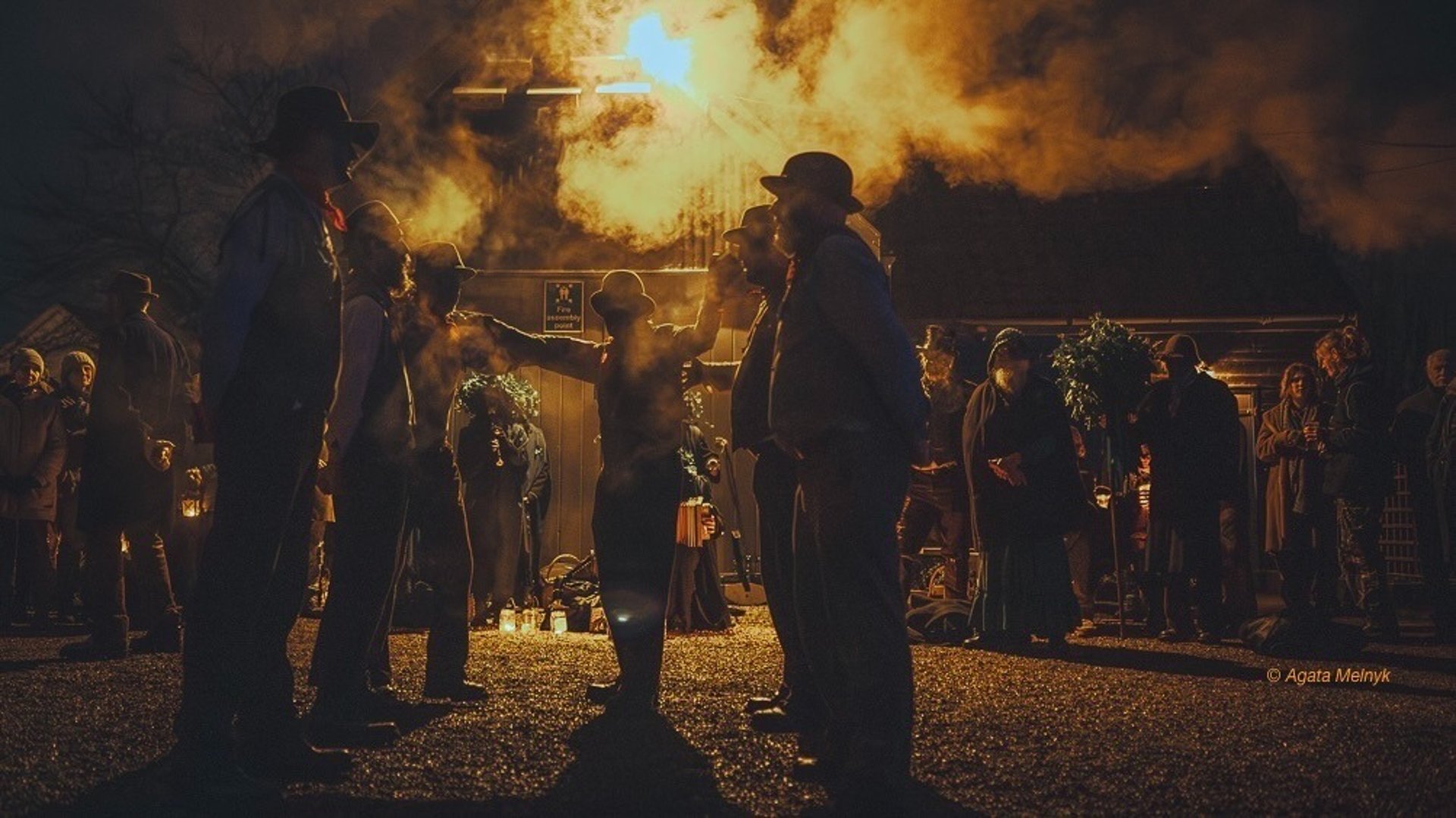
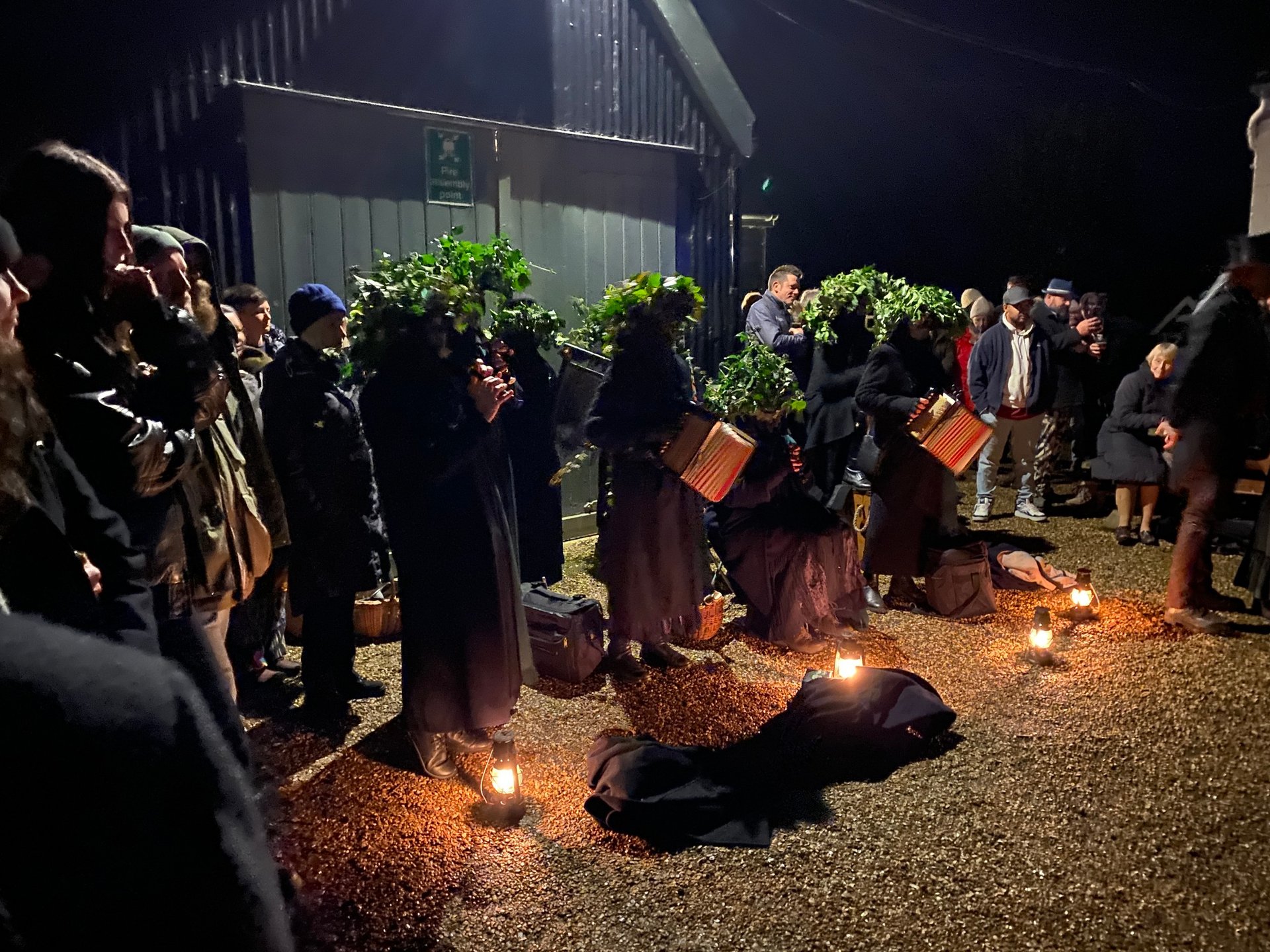
Following the traditional Blessing of the Plough at Rumburgh church on Plough Sunday at 3.00 pm, Old Glory celebrate Plough Monday at the Rumburgh Buck at 8.30 pm. You will see the plough, decorated with white ribbons and rosettes, dragged along the road from the church to the inn, followed by a display of Molly dances, the toasting of the plough, and the ceremonial burning of greenery collected from the musicians’ hats by the Ivy-man, marking the end of our seasonal programme of public dancing displays in Suffolk.
If you are interested in joining Old Glory Molly Dancers and Musicians, you are assured of a warm welcome. Also, if you have taken any photographs of us, we would be very interested in seeing them. Old Glory can be contacted by telephone on 01986 835959 or by e-mail at management @old-glory.org.uk.
For further information about Molly dancing, Old Glory recommends "Truculent Rustics: Molly Dancing in East Anglia before 1940" by Elaine Bradtke, published by The Folklore Society, University College, London (ISBN 0 903515 180).
Old Glory Molly Dancers and Musicians wish to thank the Long Shop Museum, Leiston, for the loan of the plough.
Photographs from Plough Sunday and Plough Monday at Rumburgh are in Photo Gallery 3. Video Clips are in the Video Gallery.